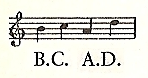
The telephone is a tuner, microphone, and synthesizer rolled into one. Its dial tone plays a Concert A for easy tuning, its receiver can blast your singing voice to anywhere in the world, and its 12 tones can play a real dissonant tune. You may recognize the melody of your home phone # among these black stemmed noteheads. It’s like sonar baby!
The telephone uses DTMF (Dual Tone Multiple Frequency) signaling―the most commonly used signaling system today. Each signaling digit (1-9, *, O, #) consists of two tones played together. Thus, a touch-tone phone is actually a touch-chord phone. These frequencies are notated above with the nearest note in Equal Temperament Tuning. Take a look at this handy graph!
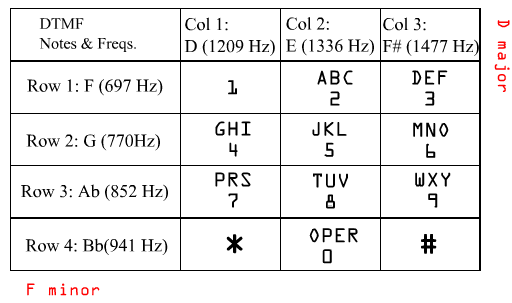
Arranged just like a telephone in a 3 x 4 matrix. The rows form an F Minor Scale, while the Columns form a D Major scale. The simultaneous sounding of two distinct scales is known as bitonality. Bitonality is a staple trick of modern classical music. Each scale is tonal in of themselves, but harshly dissonant when sounded together, and yet we are able to split them up in our mind’s ear, and follow the separate scales simultaneously―a kind of schizophonia [sic] as it were.
I’m not sure how intentional this bitonality was, but certainly the dial tone being a perfect Concert A at 440 hz is no coincidence. The lower F was most likely selected to create a Major Third interval―an open consonance that would sooth the caller while they hung on the line. Major thirds are also found in bells, car-horns, convenience stores, and all around the American soundscape.
I suggest you click this dial tone on, and go take yourself a touch-tone solo above. Call your childhood home. Call your lover’s land-line. Call Loveline. It’s almost intentional how aleatoric this phone jam is. Is this Life, or Music? Feel the awfulness of the bitones and their schizophonic dissonances. (For instance, it’s much easier to ignore the lower tones, and just play “Hot Cross Buns” on the top tones.)
And don’t forget about the busy tone Tyrone! The busy tone is somewhere between a B and a Bb, with a D# on top―a Major third interval just like the dial tone, except the busy tone pulses.
As we can see, there is an ’empirical song’ emerging here. Imagine you call up a friend on your land-line, and instead of talking like usual, you have a kind of phone jam. Below is such a jam. You dial through the digits 1,2,3,4,5,6,7,8,9,*,0,# and forget whether you’re calling or singing, just like a bird.
“I’m Gettin’ Busy (But you ain’t Home)”
This song has dual sine-waves for the touch-tones, Nintendo bass, FM drums, and Bell Lab samples. It is in 12/8 time, because there are 12 tones, each played for the length of an 8th note. There is a progressive rock section in honor of the strange tonality of telephony, as well as a Nerd-core outro, because ‘phone songs’ are always lame like that. Enjoy!
Know yo’ tones! It may just save yo’ life!
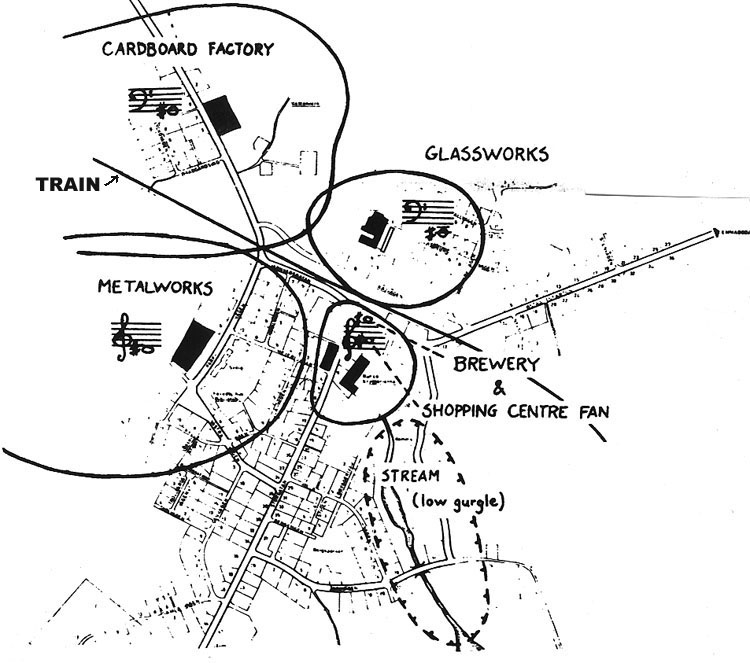

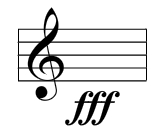 Not all sounds are ear sounds. Some sounds are beyond ears, like head sounds. These sounds are known as tinnitus, and probably everybody experiences them at one time (as do our animal friends). You may temporarily hear a “ringing in your ears” after being exposed to triple forte rock music. These are just the “phantom frequencies” that are dying inside your brain, never to be heard again. Or you may be like me and experience Chronic Tinnitus―a mildly annoying to deafeningly debilitating condition. Some sufferers have even cut off their own ears in the hopes of exorcising the sound. Of course, head sounds need to be decapitated. There have even been reports of objective tinnitus―nerve noise so loud that it can be heard outside of the head in which it is produced.