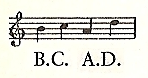
Los just launched their Kickstarter in support for their new album. Kickstarter is a website that helps raise funds for DIY projects.
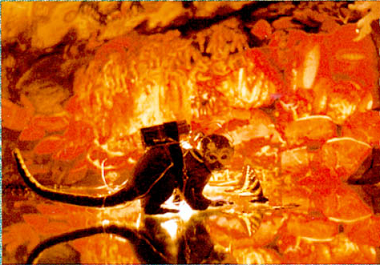
Just ask our psychedelic stove-top friend below.
Los Doggies needs your help to finish mixing, mastering, and printing the new album. With your kind donations, you’ll help us cover the costs of completing the album, and receive a copy of it in early 2013.
Thank you so much to everyone who has already donated, but we still have a long way to go to meet our goal. The Kickstarter will be active all month, but we don’t get to release this album without your support.
Los Doggies continues to provide original music, literature, and art through their websites:
Keep checking in with us all month, as we plan to release a lot of live videos to celebrate the holidays, and we’ll put up a sample track of the new album.
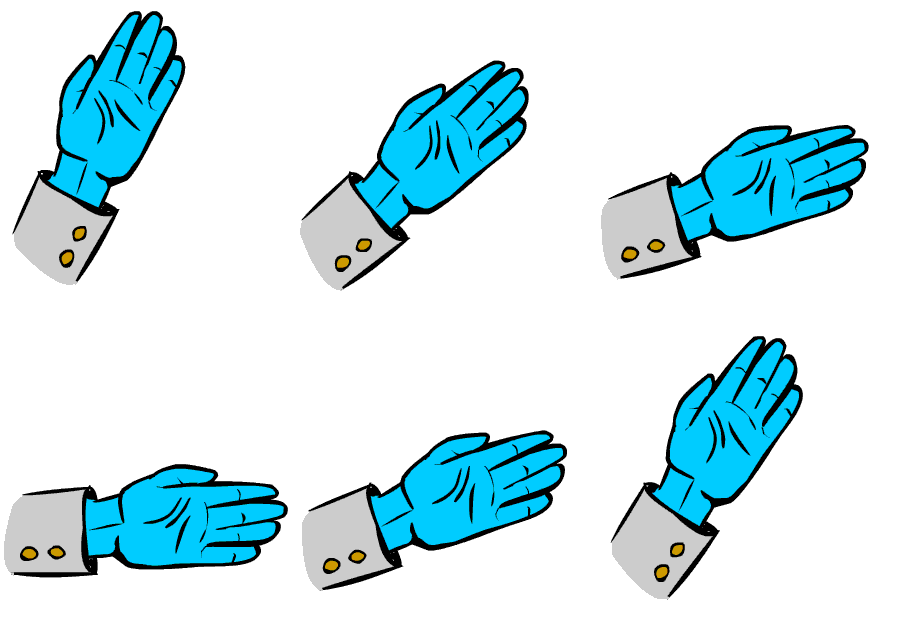
The American Indian War Chant is a popular melody sung at sporting events1. There’s even a dance craze that goes along with it—the tomahawk chop.
Fans of tribe-inspired teams sing the War Chant in perfect 4/4 time, set to an “ooga chaka” beat, while tomahawking with their right hands on the downbeats (usually the 1’s and the 3’s) like some crazy syncopated musical cult. They mostly sing in the key of F Pentatonic, prompted by marching band or ballpark organist.
Drag over the individual black noteheads below to listen, or click on the score to play/stop the entire melody.
I like this melody. It backtracks over each part. It has a kind of spiraling unfolding shape, like a snake who eats her own tail and vomits up another snake head. The first 2 wo’s are repeated quickly in the 16th note turn at the beginning of the second measure (the “wo-a-woah”). Then those first 2 measures are combined to form the essence of the 3rd measure (a perfect 4th interval below). And finally, the 4th measure mirrors the second measure, and resolves to the 1st note of the entire melody (the F an octave below).
Similar to the ‘China melody’, the Indian War Chant captures the spirit of a nation (or the melodic mocking of a minority). The F Minor Pentatonic melody references a I → V → I chord progression. With quick melodic turns of a pentatonic key and a big brassy timbre or anthemic chanting, the above melody could easily invoke any exotic place or people, but it is the duple meter—the backing beat of a “HUY-yuh-yuh-yuh” or an oogachaka with extra ooh—that gives it that authentic buffalo tom-tom Native Americiany sound.
The Indian Chant originally comes from the Florida State University Seminoles 1960’s cheer “Massacre” played at football games by the Marching Chiefs. “Massacre” features a much funkier version of the melody.
As legend goes2, the White man held a sporting contest in 1984 against the Auburn Tigers, where fans enthusiastically sang along with the “Massacre” melody, and continued to drunkenly sing, even as the marching band fell silent. The pitch might not have been perfect, and there’s no way they could hit all those bouncy rhythms in the original melody. So the simplified easy-to-sing version above was born from a historical piece of audience participation and musical elision.
The seminal Seminole melody has since spread to other teams and other states around the country, becoming the cliché Indian melody to sing at sporting events and beyond. It fits in well with other Minor Pentatonic sporting event melodies like “Ass-hole”, and “We Will Rock You”. The Minor Pentatonic scale is a natural scale, found in every musical culture, making it ideal to sing with your fellow fans or to mock your rivals with (as in nanny nanny poo poo).
Is there anything sweeter than the atonal sound of your own name? Perhaps, maybe the lost melody of home?
For those who’ve lived and lost, the memories and melodies of home stay with us, like an alpha earworm. If our names are sung (unless you speak a tonal language like Mandarin), the melody will sound sarcastic. For instance, a 2-syllable name that is sung with a rising first tone, and a falling second tone, let’s the person know they are being gently chided for their stupidity. However, there’s nothing but sine-wave sincerity in the forgotten bitones of telephone tonality.
In the age of landline phones, every home in America was denoted by a unique melody. If you got lost, or ran away, you could always echolocate your way back, like a homesick microbat. Now everything is on that fancy GPS, and cellular prerecorded music has eliminated the need for melodic home-association.
But I remember still—the memories and melodies of home. I hear it in my heart,
Don’t call that #, I don’t live there no more. This is about as close as it gets to speaking Chinese, or being a dolphin. Each number in the sequence is separated by 1/8 rests as the dialer’s finger moves between buttons. There is also a 1/4 rest in between the 3rd and 4th number, because that’s how we used to divide the telephone number’s seven note melody (notated as two measures of 4/4 above). The first 3 notes act like an antecedent, while the final 4 like a consequent. A birdy call and answer. A dueling guitar solo. I always liked the phone # above, and now it’s easy to see why. It resolves itself, beginning on the 4, and ending on the same number/chord. There is a rich metaphor somewhere in there, about musical resolution, nostalgia, and the ever changing technosoundcape, but fuck it, I’m no poet.
Go ahead and phone home to your home phone if you got one (or transpose your cell #). The bitonality of the telephone system makes for two melodies playing at the same time. The higher melody in D Major is the easiest to hear, while the lower melody in F Minor is more subconsciously felt (or ignored because of its dissonance).
There’s probably another metaphor in there about the retcons and confabulations of our subjective memories versus the objective reality of immediate experience, and how it relates to the two dissonant scales of telephone music sounding as one, but fuck dat.
The new Windows 8.0 sound scheme is an F major 7th—the popular FACE chord. Every alarm, ding, and orchestra hit error sound that once rang true to their namesake, has been replaced with a suite of electronic dance samples. I guess it’s the future, or something.
The Critical Stop Sound is now a D Minor 9th Chord—the relative minor of the computer key of F Major. This Chord includes the F maj 7th face-chord inside of it. Click on the noteheads below to listen.
Compare this with the old Critical Stop Sound. A simple C octave. Such authority! The octave let’s you know your shit’s fucked up. The new Win-8 D Min-9 critical chord is so subtle, most people will disregard it as schizophonic ambiance, no different than the false ringtones heard arpeggiating out of ubiquitous buttocks.
Epilogue:
The American telephone system is in F Major. And now, Windows Eight. It’s like we’re living in Super Mario Brothers Land, except in F Major. There is a conspiracy for harmonic homogeneity in America, to unite us under a single key. Let these fancy jazz chords serve as a warning, just as they were intended.
“The man dies in all who keep silent in the F-A-C-E of tyranny.”
—William Shakespeare (emphasis mine)
So grab your google glasses, strap on your wintops, and step into the future!
The home microwave oven is yet another dubious musical instrument—like the television and the car horn—that is tuned completely wrong. Dead flat wrong. It drones the same flat tone below, as it beeps octaves above—the “flattened B” of the groaning grid tone, the same tone most machines moan.
These ‘psych-out sounds’, or ‘made-ya-listens’, sure make it hard to make it as a musician in this world. Instead of a nice equal temperament tone, like say a B, or say maybe a B-flat, the microwave drones and beeps a quarter tone between them. The same utility frequency can be found in other home appliances. The 60 hz American Power Grid hums at the same frequency.
The low drone will play as long as you like. The fermata symbol, a cyclops eye, indicates the note is held until the conductor let’s go. Click on the unstemmed notehead to play/stop.
The microwave is monotone, more mechanical than musical, like a metronome (if it wasn’t out of tune). The most interesting thing it plays is probably the “Ready Song”. Drag over the high flat-B 4 times.
The Ready Song is in 4/4, and has a similar vibe to Backup Truck Beeps. For authentic microwaveforms, click the top drone on and off, then quickly drag over the beeps.
Epilogue:
Why are all the machines so mistuned? Is this a B-horror movie musical we live in?
Well, the 60 Hz became popular not because of its musicality, but because of it’s mechanical use in railway rotary converters. It has a very long boring history you see, that only fuddy duddies from other dimensions can appreciate.
The band Nirvana was a unique tonal experiment at the close of the 20th century.
Unlike many grunge bands (or any bands really), Nirvana’s unique sound was due to timbre (the sound of screaming vocals and distorted guitars), as much as it was to tonality (the arrangement of the notes into a key). They meddled with tritones on Bleach, discovered new and unusual 4-chord song progressions like “Aneurysm” and “Tourettes”, and tied the whole dissonant package together with their intuitive raw feel and Kurt Cobain’s natural sense of melody.
Let’s look at the verse melody from “Smells like Teen Spirit”. Click on the black stemmed noteheads to listen.
The melody resolves on the 2nd, one degree above the root note. Drag over the F root above to hear how they harmonize. They create an F9 chord like the above right.
“Smells like Teen Spirit” is a simple F Minor 4-Chord Ballad, but the melody is what makes it really interesting. It’s as beautiful to sing, as it is to rock out on a guitar. It’s worth taking a look at the entire verse melody.
Click on the score to play/stop.
The bouncy off-beat melody is an F Natural Minor scale, or the Aeolian mode (F G Ab Bb C Db Eb). Although there is only bass playing the root notes of each chord throughout, the melody beautifully expresses the full range of the Minor scale by hitting all seven notes. Kurt may only play power chords (neutral chords with only perfect fifths and octaves), but the “minorness” of the F and Bb minor chords is expressed in the melody. So too, with the majorness of the Ab and Db major chords.
In the score above, you can plainly see the fearful symmetry of the melody. The first and third measure are a kind of inversion of each other that both resolve on the 3rd (Ab), while the second and fourth measures are basically parallel, transposed down a 4th.
The demo version features a melody that is even more symmetrical. There’s no longer the upwards motion of the first three notes (“Load Up On”) that really makes the melody pop out and present itself. This bluesy revision to the melody actually makes the whole line better by including a little bit of novelty, and less redundancy in the first and second measures. Tiny imperfections and defying expectations make music new and fun.
And sometimes, you’ve got to just let the song sing to you the right melody….
The above harmonies are found ‘accidentally’ during the prechorus of the song. The guitar plays a high alternating C and F, while the vocal melody (hello hello hello how low) hits a a passing G, which results in the unlikely chords above.
Kurt Cobain would often hit wrong chords—suspend fourths when he meant to hit power chords, or major chords when he meant minor—but the dissonant jazz chords above are completely intentional, and while not explicitly played, are heard briefly in the passing minor melody.
The television test screen, known as “bars and tones”, is used to calibrate color and sound on a TV screen or computer monitor. The accompanying tone—the soundtrack to this minimalist music video—is a high sharp B that stations use to tune TV’s. But at 1000 Hz, the bars-and-tones tone is a quarter-tone sharper than the closest B5 (987.77) tone. Much to the chagrin of couch-potato guitarists, the sharper tone certainly makes it difficult to tune along at home. Drag over the noteheads below to hear this sharpened B abomination that the reptilian broadcasters devised. Compare this false B to a real B5 below.
Musicians can’t catch a break in this society. Everywhere around them are false B’s. The Grid Tone is a flatted B (60 Hz)—about halfway between a B♮ and a Bb—and feeds back from their very instruments, providing them with a false note to tune to. And now TV tuning is all off too! You’d think the reptilian broadcasters would support a single tuning to unite the human race. We need to start demanding equal temperament for all peoples.
Epilogue: I remember an interview with Elliot Smith where he talked about watching a lot of TV while playing guitar to write songs, and I imagine it is a fairly common phenomenon for artists to work under distraction. The tube inside a television is said to emit alpha waves (among other things), that entrain your brain, lower your freqs., and put your mind at rest, so that you are an impressionable zombie ready to lap up the oozing TV set slime. Experienced mediators are said to be unhypnotizable. Perhaps, Elliot like many other stay-at-home singer-songwriters entered a meditative trance while zoning out in front of the TV, finger-plucking his guit-fiddle and whatnot, or like Steve Vai who fell asleep while noodling, and dreamed of the best possible music, only to awake to the harsh noise of day. White noisey television snow.
This site was constructed with Flash widgets which looked really cool, but then Adobe killed Flash and now parts of this page don't work. Nevertheless, Zombie Los Doggies Dot Com continues to walk the Earth.
RSS
Subscribe to our RSS feed and get 1-2 posts a week about life and music.

 The Indian Chant originally comes from the Florida State University Seminoles 1960’s cheer “Massacre” played at football games by the Marching Chiefs.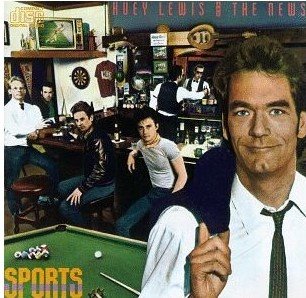
 Is there anything sweeter than the atonal sound of your own name? Perhaps, maybe the lost melody of home?
 Unlike many grunge bands (or any bands really), Nirvana’s unique sound was due to timbre (the sound of screaming vocals and distorted guitars), as much as it was to tonality (the arrangement of the notes into a key). They meddled with tritones on Bleach, discovered new and unusual 4-chord song progressions like “Aneurysm” and “Tourettes”, and tied the whole dissonant package together with their intuitive raw feel and Kurt Cobain’s natural sense of melody.
  The television test screen, known as “bars and tones”, is used to calibrate color and sound on a TV screen or computer monitor. The accompanying tone—the soundtrack to this minimalist music video—is a high sharp B that stations use to tune TV’s. But at 1000 Hz, the bars-and-tones tone is a quarter-tone sharper than the closest B5 (987.77) tone. Much to the chagrin of couch-potato guitarists, the sharper tone certainly makes it difficult to tune along at home. Drag over the noteheads below to hear this sharpened B abomination that the reptilian broadcasters devised. Compare this false B to a real B5 below.
  I remember an interview with Elliot Smith where he talked about watching a lot of TV while playing guitar to write songs, and I imagine it is a fairly common phenomenon for artists to work under distraction. The tube inside a television is said to emit alpha waves (among other things), that entrain your brain, lower your freqs., and put your mind at rest, so that you are an impressionable zombie ready to lap up the oozing TV set slime. Experienced mediators are said to be unhypnotizable. Perhaps, Elliot like many other stay-at-home singer-songwriters entered a meditative trance while zoning out in front of the TV, finger-plucking his guit-fiddle and whatnot, or like