Skip to content

Song of the Songs

songs

Here’s a dissonant little number named for King Solomon’s “song”—the sexiest, most funkadelic scripture of the Old Testament.
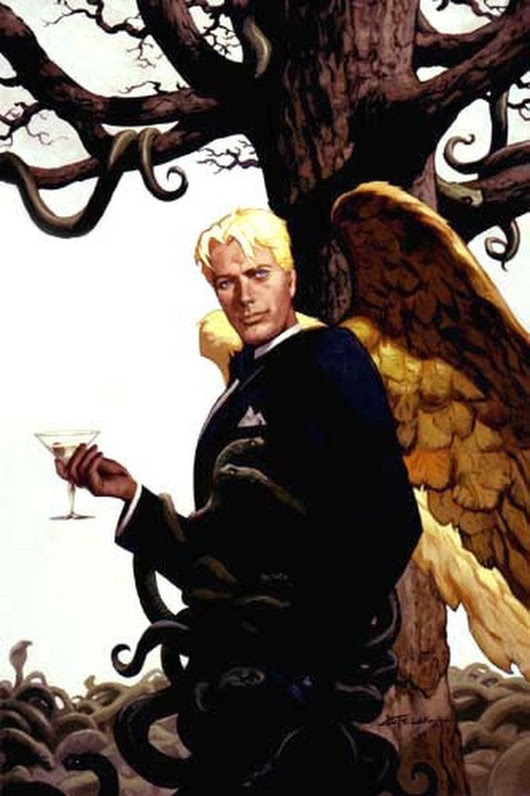
Lucifer“Song of the Songs” features this bitonal chord. I once dubbed this “the Luciferean Chord” although I don’t think I know what I meant by that. “Luciferean” means something like “beautiful evil,” considering that he’s usually portrayed as an Aryan fop.

Drag over the noteheads to listen to a Luciferean E Chord.

This is a beautifully dissonant chord with a kind of Lydian feel. There is the #4 from the Lydian mode; a Major Seventh in the middle; and on top, the dreaded ♭2 from Phrygian territory. Thus, there is a note cluster of D♯, E, and F, but when spread out over many octaves the dissonance is mitigated, and it almost sounds harmonious.

The other chord featured is an A Major 7 (add ♯4). Following a simple One to Four chord progression in the root, the harmony paints a much different tonality.

Drag over the noteheads below. Switch back and forth between the two chords to hear the full progression.


All in all, the two chords create a kind of Raga with two different scales ascending and descending. It is reminiscent of the Japanese Insen scale, a composite of Lydian and Phrygian tones. E Lydian down low with A♯ Minor Pentatonic up top, and a dissonant mix in between.

Listen to “Song of the Songs” and try to pick out the two chords.
Showtime

flyer-june-9_

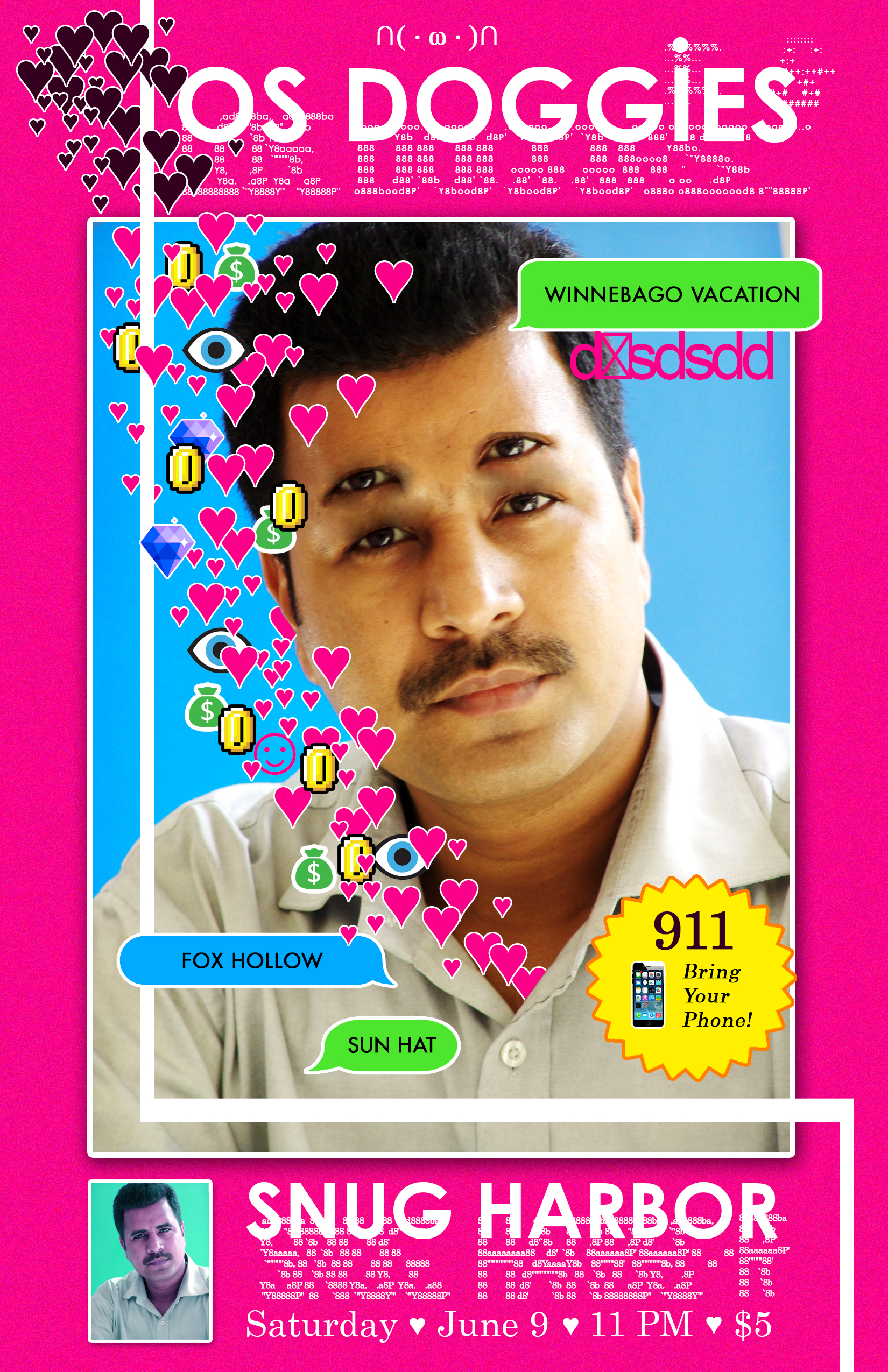
If you live around upstate NY, drop by our local haunt on June 9 to see us perform with a few great bands, including Winnebago Vacation from New Paltz, Fox Hollow from Long Island, and Sun Hat from Philadelphia.

Event Page

Waltz #1

waltz
This is our first waltz, and it’s numbered the first, with the implicit threat that there will be more waltzes in your future. Are you scared? Waltzes are like clowns and can be terrifying for some. But this is just a pop waltz, so don’t worry.

Yes, I am copying Elliot Smith here and his numbered waltzes, #1 and #2. It’s a shame he never got to do a third. “Waltz #1” is a sweet Lydian piano waltz—as perfect as music can be. “Waltz #2” is also great, an Aeolian folk waltz. Both waltzes are backed by strings, as all the big waltzes are.

Elliot Smith was a big influence on me, because I too wrote songs in front of the television while idly picking at a guitar. The old CR tubes in TVs used to hypnotize people, but there was a bit of free will left in the decision. It was nice to set aside hypnosis time each day. As the Inner Game of Music would have it, the TV draws the conscious attention of the Self 1, allowing the Self 2 to flow freely upon the instrument. While the man in the little head is distracted by the shiny box, the God of Muscles takes over and improvises mostly mediocre music with many stumbles and the occasional diamond in the rye.


“Waltz #1” by Los Doggies is in the key of F Major, with one of many appearances of the Six Add Nine Chord. It also features a whale of a bass solo from subPixel. Catch him this Thursday at Commissary in New Paltz.

Heddagabalus

Newpalsapalooza

31655644_10156196299989178_7867356574090526720_n

This is our next show—Newpalsapalooza. It’s a three day, town-wide music festival in New Paltz hosted by Nachohouse, Mom’s, Law Office, Big Blue, and Snug’s.

Los Doggies plays May 12, 4:30 PM at The Law Offices.
Event Link

Blood-Fires

bloodfires

Here’s another new song, “Blood-Fires”, written on a toy guitar with only three strings to its neck. It helps to add limitations and restraints on composition. The Presidents Of The USA wrote their hits “Gump” and “Peaches” on a three-string. The artist Matthew Barney tied himself with fishing rope to a gallery wall and hung a canvas on the opposite wall, so that it would take a Sisyphean effort just to draw a single line. Beethoven was so awesome, the only thing left for his songwriting to progress was to take away his ears.

Call it the “Moonshadow Sonata.”

And if I ever lose my ears, I won’t have to hear no more.


The three-note chords are found in the verses. A parallel harmony of fourths in the upper two voices is paired with a suspended bass moving in the same direction, while producing sixth and seventh chords along the way. These quartel harmonies built out of fourths are an old trick I stole from somewhere. I go through phases of different chords. In my angsty teenage years, I favored the diminished but mellowed to a major seventh in my twenties. Now in my “late twenties,” I can’t get enough of fourth chords. Straight up the neck with one finger.

“Blood-Fires” is mostly in E Major, as all the best songs are. E Maj. is always a very white key for me, like pure white ivory bones of a virgin tusk surrounded by a ghostly ectoplasm of even whiter vibration.

Purchase “Blood-Fires” on Bandcamp for one dollar.

Come and See

comeandsee

“Come and see,” said the angel, and a thousand trumpets sounded at once, exploding everyone’s heads. When you hear these words, you better be winding up to Heaven already, or else you’ll have to face the leftover schlock on Earth: double dragons, zombie nephilim, and a sword-mouthed Messiah.

“Come and See” is also the name of a blues song in F#.

F# is a nice modern bluesy key; it actually is blue in a synesthetic way. The F appears as an ocean of Mediterranean blue with the sharp symbol (#) like a metal grating on top to keep the waters from overflowing.

Listen to “Come and See”: