Skip to content

Dun Dun Duuun

There are three notes for when shit gets real. The popular “Dun Dun Duuun” has been around for centuries and pops up in every piece of media. You know what notes I’m talking about when I say “Dun Dun Duuun.” There’s even a Wikipedia entry for “Dun Dun Duuun!”

A dun on the Eb, another dun on the C, and a final duuun on the F#. This music interval is the infamous diabolus in musica, a tritone between the C and F#. This interval is so evil that medieval churches banned it. The final duuun is a type of diminished chord. At least that’s how it sounds to my tinnitus-y ears. I’m not a blind autistic guy, so I can’t perfectly break down a 10-note chord.

Technically, the chord is a F#6(#11) or a Gb6(#11). I know some music nerd is going to get mad at me for being so enharmonically disgusting. But if you think of the above example in G minor with a latent IV V cadence, it makes sense to mix and match sharps and flats.

These notes have been widely used as a shorthand for suspense—in Victorian melodramas, radio, and cartoons—so you know they’re the right notes.

“Dun Dun Duuun” might have inspired (or been inspired) by the dino-brawl from Fantasia with The Rite of Spring providing the score. Three similar notes play over the death of the stegosaurus (not my favorite dinosaur).

Dick Walter recorded the popular sting known as Shock Horror (A), but he says he probably got it from his mom’s old melodramas. It must be nice to have composed a piece of music that people know phonetically. The sting is timeless owing to its orchestral sound, but it’s a little long for today’s audiences.

There is a new suspense sting in town that is gaining popularity—the alert sound from the game Metal Gear Solid. In keeping with refinement culture, the alert sound is even more economical than dun dun duuun. This is a single dun, or rather a ree! with strong feline energy.

This is the suspense sting that zoomers are familiar with because they play videogames rather than listen to Victorian melodramas on a restored 19th-century Victrola gramophone. Or wait maybe they do do that.

The alert sound is a diminished seventh chord, a very goofy chord indeed. It’s a close relative of the major sixth sharp eleventh (dun dun duuun chord) with a one note difference. Instead of a major third, this chord has a minor third. In fact, it’s all minor thirds, which is why it’s so clownish.

When I was a young’un, I used the diminished seventh chord exclusively with no regard for my audience or my own ears. I was trying to be Stravinsky Jr. Now that I’m older I’m more into the maturity of the major sixth sharp eleventh chord, even if I can’t get my enharmonic spellings correct.


FEMA Emergency Alert Tones

FEMA attacked everyone’s phones this week with a couple dissonant tones. No one in America could escape them. It’s nice to know we’re all connected by something so horrible. Sometimes I forget there’s a society out there, stuck as I am in my solipsistic bubble-boy existence.

I actually turned my phone off on Wednesday afternoon, because I’m a schizo conspiracist. Most people don’t know how to turn their phones off, or they choose not to know, so they were forced to hear the FEMA music, a 5G MK-Ultra torture session to excite their spiked blood.

Since nothing ever happens on time anymore, this was an exciting event, like live television. One by one, the phones of the masses sounded off with the dreadful tones.

The emergency alert is a high-pitched whole-tone interval of half-flat A’s and B’s blaring in 11/8 time. The government uses odd-time signatures to scare you, man.

The same tones are used for Amber Alerts and the Emergency Broadcast System, so they must be some official tones that the government likes to torture people with. Most likely the CIA developed these tones by experimenting on prisoners and orphans.

This comfy message used to come on late-night TV in the old days:

I guess if the government is giving you and your unvaxxed friends a heads up that they’re about to throw you into the FEMA camps, you want it to sound as annoying as possible.

The mild hysteria surrounding this event harkens back to the halcyon days of the cozy Cold War that warms the cockles of my boomer heart. It makes me nostalgic for my childhood spent ducking and covering under my school desk, playing with my nuclear shadow, and watching 80s action movies that I substituted for having a real personality.

Nice Chords

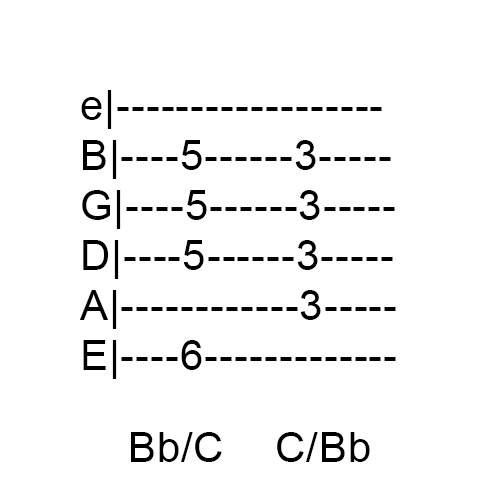
I’ve been obsessed with these two chords lately. The first is a Bb major with a C root, and the second is a C major with a Bb root. C/Bb and Bb/C. The bass moves up from Bb to C, while the top moves down from C to Bb. It has an up yet down feeling.

Halfway between the Lydian and Mixolydian modes, the two chords seem to be of two minds. Lydian in the bass. Mixolydian up top.

Here’s how to play it on guitar.

I would like to see hundreds of songs written with these chords because they’re so damn nice. If you were thinking of writing a Mixolydian song with a simple I to VII chord progression, or if you were writing a Lydian song with a I to II, consider combining them both at once to create a mix of Mixolydian and Lydian. Maybe call it: Mix-Of-Lydian.

Lost Sound

Lost was peak Hollywood television. Long before the bulimic formula of consuming entire seasons in a sitting, viewers would have to wait an entire week in between cliffhangers, discussing single episodes around the watercooler like rats. The average TV-goer would’ve thought about an episode the next day and possibly envision in their mind’s eye what would happen on the next episode.

People in those days were quasi-conscious beings with a rich internal life made up of movie and television scenes. There was no streaming on-demand, no infinite feed, or phantasmagorial reel. This was boomer TV. Now everything happens at the same time, everywhere all at once, so nothing really matters.

Lost was notable for its musicless opening. Sure it was an electronic Kubrick ripoff, but it did its job in timely fashion. The in-show music was of the orchestral tugging-on-the-heartstrings variety, but the intro and outro were noise-based. And based they were!

Every Lost-appreciater knows well the ending thud. In the first few episodes, it was more of a timpani, but they eventually settled on this little beauty.

Like the sound of J.J. Abrams blowing on his glasses to clean them. Or the sound of J.J. Abrams blowing hot smoke up your ass. Or the soft fart of a smoke monster?

Lying under all that noise, there is a low C2. This is the same ominous note that Mike Tyson composed his entrance music out of. Perhaps the Lost sound-designers were inspired by Tyson’s leitmotif.

I think this sound starts with a “P.” How would you write it phonetically? Let me know in the comments.

J.J. Abrahams is known for his “mystery box” formula of TV writing, a means of dragging viewers along on a wild goose chase, because we all know it’s not about the goose so much as the wild chase that leads to nothing.

This was before J.J. killed Star Trek and Star Wars. Who knows what franchises he’ll kill in the future? The Wings reboot? Regarding Henry the Second? Somehow this guy keeps getting work in Hollywood and it’s nigh impossible to say why.

Mike Tyson Entrance Music

Mike Tyson was a hero to many Gen X kids as the end boss from Mike Tyson’s Punch-Out!! until he raped a girl and bit off Holyfield’s ear IRL. Then he became vegan and everyone really hated him. But now, he’s back eating meat and appearing on all the bro-tier podcasts. Iron Mike is once again in the good graces of the NPC public.

For the purpose of this blog, Tyson had legendary entrance music. There was no bombast or cheese, no pop song, no “Living in America” or “Ride of the Valkyries,” just one ominous note.

The one note in question was a low C2 and there were actually ambient synth drums behind it. I defy you to identify the downbeat in this monster music. What time signature even is this?

The TV commentator said of the music:

This heavy metal sound you hear is Mike Tyson about to make his way in, I believe. The sound is deafening here in the arena so I won’t try to yell over it … It’s interesting to note that Mike Tyson selected his pre-fight music just noise. Every once and a while you hear the clanging of chains. I think that’s what he’s got in mind to do to Mike Spinks’s head, but we’ll wait and see. Everything that Tyson does is intimidating. There he is; he comes out; he doesn’t wear a coat in; he’s worked up a full sweat. I want to tell you: the electricity in this crowd is awesome!

By contrast, Michael Spinks’s entrance music was “This Is It” by Kenny Loggins, a yacht-rock classic. The stark change from an upbeat pop tune to a singular menacing drone is one of the most memorable moments in sports music history. It would be like if Kenny Loggins opened for the psychedelic stoner-rock band Sleep. Or Hall & Oates opening up the mouth of hell.

I’m the best ever. I’m the most brutal and vicious, and most ruthless champion there’s ever been. There’s no one can stop me. Lennox is a conqueror? No, I’m Alexander, he’s no Alexander. I’m the best ever. There’s never been anybody as ruthless. I’m Sonny Liston, I’m Jack Dempsey. There’s no one like me. I’m from their cloth. There’s no one that can match me. My style is impetuous, my defense is impregnable, and I’m just ferocious. I want your heart. I want to eat his children. Praise be to Allah.

Clown Horn

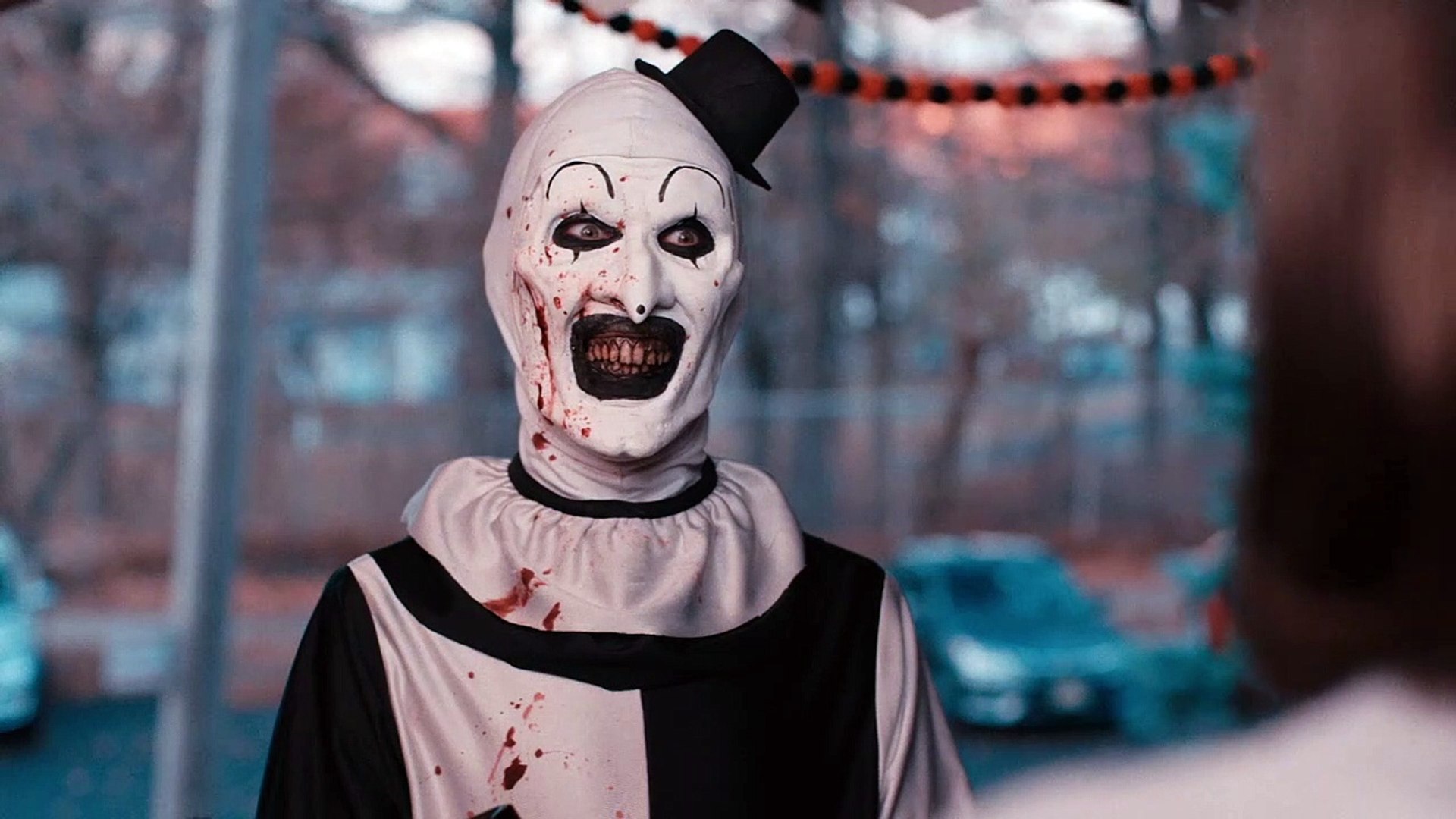
Clowns used to be the height of children’s entertainment, but after Pogo and Silly Billy, clowns fell out of fashion. They survive today as horror-movie villains and meth-bands for adult entertainment. Kids would rather see sexy-ass drag queens than some stupid clown.

I knew a girl in college whose parents were both clowns. She had gone to clown college to study the family trade but found it just wasn’t for her. She switched to a worthless liberal arts degree, and I suspect her clown parents were very disappointed. Still, she spoke of their profession with the utmost seriousness. There was not an ounce of humor in the fact that she came from a family of clowns, which I assume went back for generations all the way to founding-stock American clowns.

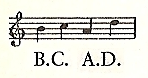
Clowns appear to be happy, but on the inside, they are quite sad (and possibly pedophile child-murderers). Just like the classic clown horn, it sounds funny, but it’s actually a minor third interval—the saddest of all intervals.

The D in the above example is a quarter-tone sharper than a minor third, but we’re not too concerned with musical cents here—mere chump change. I’m practically deaf with chronic tinnitus, so one semitone is enough for me.

In human speech, the clown horn is translated as “waka waka.” If you don’t have your horn on you, just say that instead. You’ll be very popular, just like me. Spreading strife is my greatest joy.

Verifone Melody

The old sounds of money were so pleasing they could fill a symphony, or a psychedelic blues song. From the cha-ching of old timey cash drawers to the bling-bling of the petrodollar, money used to spread euphony like disease. Cash registers rang like slot machines and everyone had dollar-signs in their eyes. It’s enough to make you nostalgic for the Reagan era when money would trickle down like rain. Cash was king, and coins his jingly jester.

Today, in our cashless society, where money is non-physical, there is a sonic need for some kind of signal to let the customer know they are actually spending real fiat currency. What sound does crypto make? Or NFTs? Even GIFs can have sound. You’d hope Bitcoins would klup like in Super Mario. But it’s all silent, and silence is sleazy.

Boomer credit card machines were nothing special, but they did make a satisfying noise, if they didn’t slice your fingers off in the process.

The sound of an imprinter is intuitive: it chomps and devours your bank account.

Sometime in the nebulous 2000s, the ruling-class banksters once again turned to classical melodists for real-life foley. Behold and hearken, the Verifone melody:

This melody asks a question. Are you happy with your purchase? Would you like to buy more? Is corporate-branding an adequate substitute for your true spirit-self?

The Verifone melody is one of the most popular sounds in the world, heard millions of times a day, much more than Westminster Quarters. Shopaholics hear this Pavlovian chime and salivate. Of course, it’s in the universally pleasing key of C. Although no C is sounded in the above melody, it is implicitly there. Perhaps you are the C, gentle consumer. With every sale and dopamine hit, the consumer is ever seeking more melodic transactions to resolve their atonal insatiability.

Don’t forget: Usury is a sin! It’s one of the first things God banned after murder and pagan key-parties.